Silicone Roof Coatings: An Expert Answers the Questions That Matter
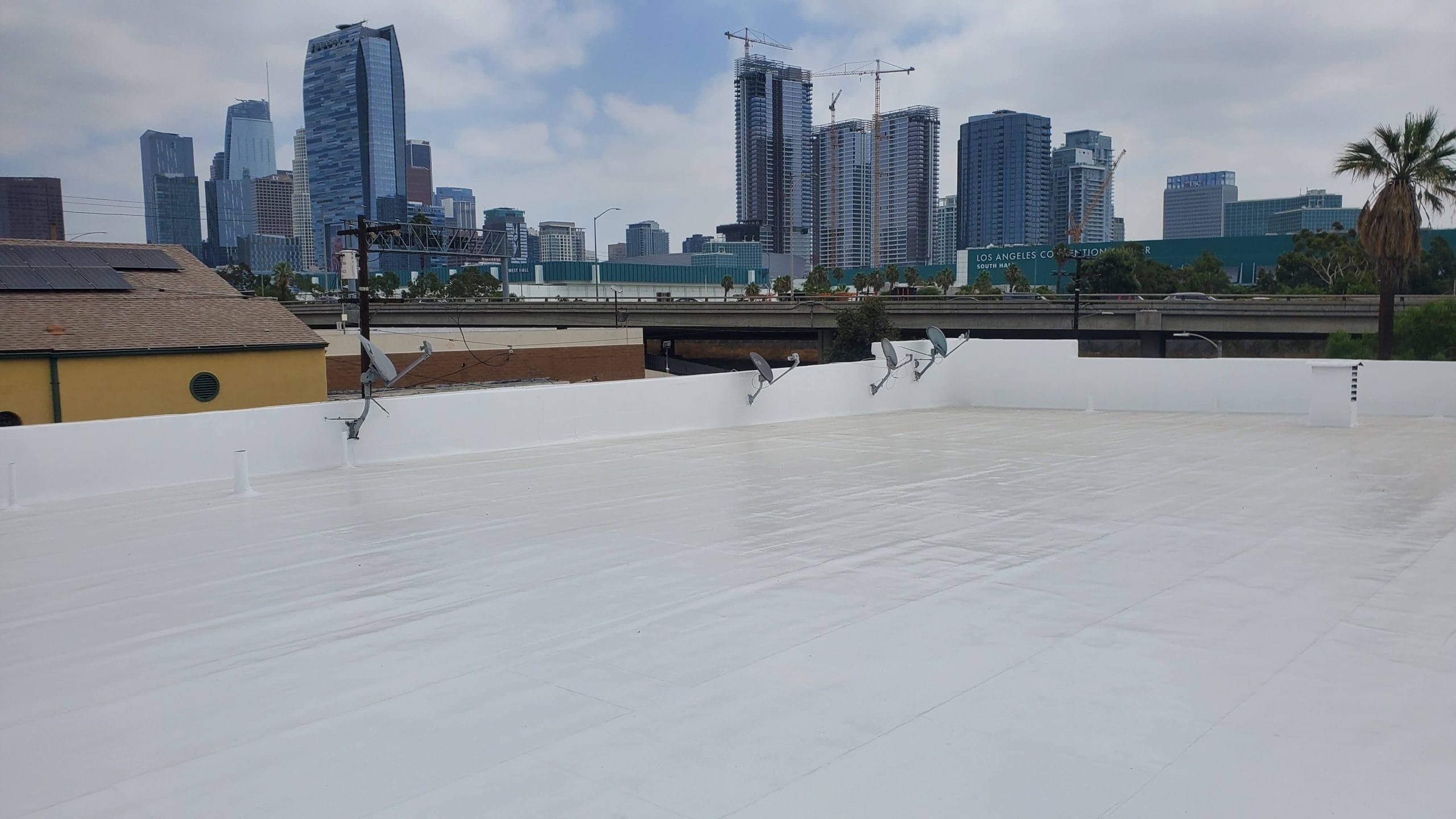
Silicone has become one of the most discussed materials in commercial roof restoration, but its popularity can also create misconceptions. Is it appropriate for every low-slope roof? Can it solve ponding-water problems? Will it stop existing leaks? And what matters more—the coating itself or the condition of the roof underneath it?
To separate useful roofing principles from marketing shorthand, we approached this guide as a conversation with a commercial roofing specialist. The discussion explores how Silicone Roof Coatings work, where they can fit within a restoration strategy, and what commercial property owners should understand before choosing a coating system.
Q: Why has silicone become such a prominent option for commercial roof restoration?
A: Silicone has several characteristics that make it useful for certain commercial restoration applications. It is commonly selected for its resistance to ultraviolet exposure and its ability to maintain performance under demanding weather conditions. Because it is fluid-applied, it can also create a continuous coating surface across a properly prepared existing roof.
That last phrase—properly prepared existing roof—is critical. Silicone isn’t a substitute for evaluating the roof. You still have to understand the substrate, existing membrane or surface, flashing, penetrations, drains, previous repairs, and any conditions that suggest moisture within the assembly.
A good coating system starts with the roof, not with the bucket.
“Silicone is a strong restoration material, but the success of the system is determined before the first gallon is applied.”
EXPERT TIP #1
Inspect before selecting chemistry. A coating should be chosen to fit documented roof conditions rather than selected first and justified afterward.
Q: What makes silicone different from acrylic roof coatings?
A: They are different coating chemistries, so comparing them requires more than asking which one is “better.” Silicone systems are commonly considered where UV and water exposure characteristics are important. Acrylic coatings are widely used in reflective commercial roofing and have their own advantages, application requirements, and environmental limitations.
Specific formulations within both categories can vary. You need to review approved substrates, preparation requirements, primers, specified coverage, finished system thickness, curing conditions, and manufacturer requirements for the exact products being considered.
The mistake is turning chemistry into a ranking. The better question is: which system’s documented characteristics match this roof and its operating conditions?
Q: Is silicone automatically the best option for a roof with ponding water?
A: No coating should be used as an excuse to ignore drainage. Silicone products may have characteristics that make them suitable for particular water-exposure conditions, but that doesn’t mean a silicone coating corrects the reason water is accumulating.
If water regularly remains in an area, you need to ask why. Is a drain obstructed? Is the roof geometry contributing? Has the substrate changed? Is there another drainage deficiency? Those questions belong in the assessment.
The manufacturer’s requirements for water exposure should also be verified for the specific silicone system. “Silicone” is a chemistry category, not a universal specification.
EXPERT TIP #2
Separate waterproofing from drainage. A coating can help create a protective surface, but drainage determines how water moves off the roof. Both need to be considered.
Q: Can silicone coating stop an existing commercial roof leak?
A: It can form part of a restoration strategy after the leak source and relevant roof conditions have been evaluated. What you don’t want to do is see an interior stain, go directly to the roof area above it, and assume that covering that spot solves the problem.
Water can travel before it becomes visible inside a building. The actual entry point might involve flashing, a penetration, a curb, a seam, a previous repair, or another nearby condition.
Known defects should be repaired as part of the restoration process. If there are signs that moisture may exist within the roof assembly, further investigation may be appropriate before deciding whether coating is suitable.
The coating should complete the waterproofing strategy—not replace the diagnosis that makes the strategy possible.
Q: Which existing commercial roofs can receive a silicone coating?
A: That’s a project-specific question because compatibility depends on the existing roof and the selected silicone system. Different substrates can require different cleaning, preparation, primers, repairs, or adhesion procedures.
Commercial roofs can also become complicated over time. You might have the original membrane in one area, several generations of repair materials in another, newer flashing around replacement equipment, and different conditions around drains and penetrations.
That means compatibility should be verified rather than assumed. An adhesion test or other manufacturer-required procedure may be appropriate depending on the product and substrate.
“The question isn’t whether silicone can stick to a roof. The question is whether the specified silicone system can be properly integrated with everything that particular roof contains.”
Q: How important is preparation before silicone is applied?
A: Preparation is one of the most important parts of the project. The finished silicone surface gets most of the attention because it’s visible, but successful restoration depends heavily on what happens beforehand.
The scope may involve cleaning and preparing the existing surface, correcting identified defects, treating seams, addressing flashing and penetrations, detailing drains and curbs, and using primer or reinforcement where the specified system requires it.
You also need appropriate application conditions. The roof surface and surrounding environment must meet the requirements of the product being installed.
Think of it this way: if the substrate isn’t ready, applying a premium coating doesn’t make the substrate ready. It simply means you’ve put a premium material over an unresolved condition.
EXPERT TIP #3
When reviewing a proposal, don’t ask only which silicone product will be used. Ask what cleaning, repairs, detailing, primer, reinforcement, and substrate preparation are included before coating begins.
“If preparation is treated as a minor line item, the project is already focusing on the wrong part of the roof.”
Q: How is silicone coating thickness controlled during installation?
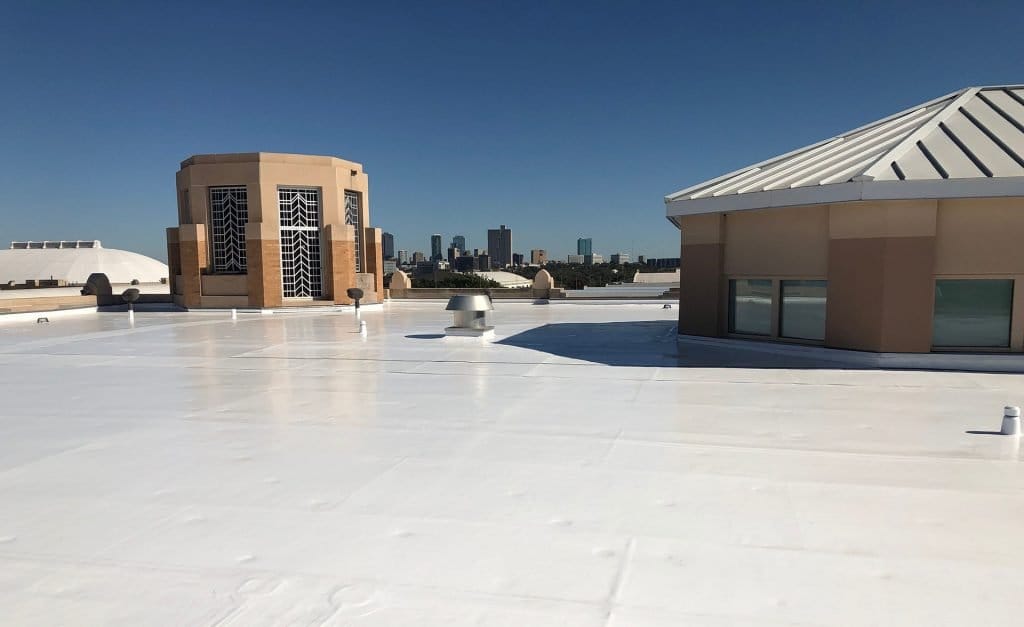
A: Thickness should be tied to the requirements of the specified system rather than judged by appearance. Depending on the product and application, contractors may use specified coverage rates, material quantities, wet film measurements, dry film measurements where applicable, and other quality-control procedures to help verify installation.
The manufacturer’s documentation is the reference point. One silicone system may require a different application rate or finished system build than another, so there is no universal number that should be applied to every commercial roof.
Material reconciliation can also be useful. If you know the roof area, specified coverage rate, number of coats, and actual material quantity used, those figures provide another way to review the project. They don’t replace direct quality control, but they can add useful context.
EXPERT TIP #4
Don’t accept “the roof is completely covered” as the only measure of installation quality. Ask how the specified coverage and system thickness will be documented.
Q: Does a silicone roof coating make a commercial building more energy efficient?
A: Many silicone roof coatings are available with highly reflective surfaces, so they can change how the roof interacts with solar energy. Solar reflectance describes how much incoming solar energy is reflected, while thermal emittance describes the surface’s ability to release absorbed heat through thermal radiation.
Those are measurable roof-surface properties. What they don’t provide is a universal percentage reduction in utility costs.
Building energy consumption also depends on insulation, HVAC efficiency, climate, occupancy, operating schedules, internal loads, roof area, and other variables. A reflective silicone roof can therefore be part of an energy-management strategy without supporting a blanket claim that every building will achieve the same savings.
“Reflectivity tells you something measurable about the roof surface. It does not tell you everything about the building beneath it.”
Q: Can silicone actually extend the service life of an existing roof?
A: Extending the useful service of an existing roof is one of the reasons property owners consider restoration, but the starting condition matters enormously. A suitable roof may be repaired, prepared, detailed, and protected with a compatible coating system rather than immediately proceeding to full replacement.
That’s the useful way to think about Roof Life Extension Solutions in Folsom: not as a promise that coating adds the same number of years to every roof, but as a strategy for preserving roofing components that remain serviceable.
The actual outcome depends on the existing assembly, restoration scope, selected system, installation quality, exposure, rooftop activity, maintenance, and other project-specific conditions. Warranty terms and maintenance requirements should also be reviewed for the particular system.
Q: What maintenance does a silicone-coated roof need?
A: Restoration doesn’t eliminate maintenance. In many ways, completion of the project gives the owner a better baseline from which to manage the roof.
Drains and scuppers should remain clear. Penetrations, flashing, equipment curbs, repaired locations, and traffic areas deserve attention during future inspections. If HVAC contractors or other trades add equipment or create new penetrations, the waterproofing system should be evaluated afterward.
It’s also worth preserving installation documentation—product information, photographs, repair locations, material records, and relevant warranty documents. That information makes future condition assessments more meaningful.
EXPERT TIP #5
Treat the completed restoration as the beginning of a new maintenance record. Document the roof while its condition and installation details are still clear.
Q: When is roof replacement a better choice than silicone restoration?
A: When the conditions that need correction extend beyond what restoration can responsibly address. That could include widespread deterioration, an unsuitable substrate, extensive moisture-related conditions, significant deck or structural concerns, or broader changes needed within the roof assembly.
Replacement may also provide a better opportunity when major changes to insulation or other roofing components are part of the building’s objectives.
This is why a contractor shouldn’t begin every assessment with the assumption that coating is the answer. Sometimes restoration is appropriate. Sometimes localized repair makes sense. Sometimes replacement is the responsible recommendation.
Q: What should a building owner ask before approving a silicone coating project?
A: Ask questions that reveal the reasoning behind the proposal:
- Why is this roof considered suitable for restoration?
- Were moisture-related concerns evaluated where appropriate?
- Which defects will be repaired before coating?
- How will seams, flashing, penetrations, drains, and curbs be treated?
- Why was this particular silicone system selected?
- Is primer or reinforcement required?
- What coverage and thickness does the specification require?
- How will installation quality be documented?
- What inspection and maintenance requirements follow completion?
Those questions move the conversation away from price per gallon and toward the performance of the complete restoration system.
The Expert’s Closing Advice
Q: If you could give a commercial property owner only one piece of advice about silicone roof coatings, what would it be?
A: Don’t ask whether silicone is a good roofing material. Ask whether silicone is the right restoration system for this particular roof.
Silicone has characteristics that can make it highly useful in commercial restoration, but those characteristics don’t eliminate the fundamentals. The existing roof still needs to be evaluated. Moisture concerns still matter. Drainage still matters. Repairs and detailing still matter. Compatibility, preparation, application rate, thickness, and maintenance still matter.
When those pieces align, silicone can become part of a thoughtful strategy for preserving a suitable commercial roof. When they don’t, choosing silicone simply because the material has an impressive reputation puts the decision in the wrong order.
“The best coating decision isn’t about choosing the strongest product claim. It’s about matching the right system to the roof that is actually in front of you.”